


If you've ever stood in the laundry aisle completely overwhelmed by the endless rows of detergent options, you're not alone. Between the flashy labels, vague "clean scent" promises, and ingredient lists that read like a chemistry exam, finding something that actually works without loading your clothes (and home) with harsh chemicals feels nearly impossible.
That's where enzyme laundry detergents come in, and honestly, they're a bit of a game changer. Enzymes are naturally derived proteins that break down specific types of stains at a molecular level, think grass, grease, blood, and food. They work smarter, not harder, which means you get a genuinely deep clean without relying on toxic fillers or synthetic fragrances.
But here's the catch: not every enzyme detergent is created equal, and some brands use the "natural" label pretty loosely. So we did the research for you. In this guide, you'll find our picks for the best enzyme laundry detergent options that are both effective and actually non-toxic. Whether you're washing kid clothes or gym gear, there's something on this list for you.
What Makes an Enzyme Laundry Detergent Actually Work?
If you've ever wondered why some detergents genuinely lift a stubborn stain while others just... move it around, the answer almost always comes down to enzymes. Unlike conventional surfactants that essentially blast your fabrics with chemical force and hope for the best, enzymes are biological catalysts that work with surgical precision. Each enzyme is designed to recognize and break down one specific type of molecule, dismantling stains at the molecular level before they ever get the chance to set permanently into your favorite linen shirt.
The four enzymes you'll find in the best enzyme laundry detergent formulas each pull very different weight. Protease handles protein-based stains like blood, sweat, and grass. Amylase goes after starches, think pasta sauce, gravy, and anything else that came off a dinner plate. Lipase dissolves fats and oils, from cooking grease to the natural sebum your skin deposits on collar and cuff edges over time. And cellulase does something a little more nuanced: it lifts deeply embedded dirt from cotton fibers while simultaneously reducing pilling, which means your clothes actually look better the longer you use an enzyme-based formula. Each one is a specialist, not a generalist.
This specialization is exactly why multi-enzyme formulas outperform single-enzyme options on real-world laundry. A grass-and-barbecue stain from a summer cookout isn't just one type of soil. It's protein from the grass plus fat and char from the grill, and resolving it fully requires both protease and lipase working together. According to Understanding Enzyme Laundry Detergents, combining enzyme classes directly reflects the reality that most household stains are mixed in composition.
One of the biggest practical advantages of enzyme formulas is their cold-water performance. Most laundry enzymes are optimized for the 60 to 95°F range, meaning they're highly effective in cold and warm wash cycles. Conventional detergents lean heavily on hot water to activate their surfactants, but enzymes do their work biologically rather than thermally. This is better for your energy bill, better for color retention, and better for fabric longevity overall.
Because enzymes handle the heavy lifting chemically, well-formulated enzyme detergents can rely on lower concentrations of surfactants to get the job done. That translates directly into a gentler experience for sensitive skin, less wear on your fabrics over time, and a cleaner footprint for waterways when that rinse water exits your machine.
How to Spot a Greenwashed "Non-Toxic" Detergent
Knowing what's actually in your detergent matters just as much as picking the right enzymes. The "non-toxic" and "plant-based" labels on laundry products are largely unregulated marketing language, and some of the most cleverly packaged products hide genuinely harmful ingredients behind reassuring green branding. Here's how to cut through the noise.
The "Fragrance" Loophole Is Bigger Than You Think
That single word "fragrance" on an ingredient label is a legally protected trade secret, and it can conceal a blend of up to 3,000 synthetic chemicals, including endocrine disruptors, neurotoxins, and carcinogens, none of which require individual disclosure. This applies even when the front label reads "natural scent" or "plant-derived fragrance." A genuinely non-toxic detergent will either skip added fragrance entirely or disclose exactly what's creating the scent by name. Vague terms like "botanical fragrance" don't meet that standard.
Red-Flag Ingredients That Hide in "Natural" Products
Several specific ingredients consistently appear in products marketed as clean or plant-based, and they're worth memorizing. Optical brighteners coat your fabrics with UV-reactive chemicals that don't rinse out fully and can irritate skin. Phosphates are known respiratory irritants and reproductive toxicants. Nonylphenol ethoxylates (NPEs) are hormone disruptors that are particularly harmful to children and are banned in most product categories, yet some "natural" brands still use them. Formaldehyde can aggravate eczema and irritate the eyes and lungs. Quaternary ammonium compounds resist biodegradation and accumulate in the environment. If you spot any of these on a label, it's a red flag, regardless of the packaging aesthetic.
PVA Pods: A Greenwashing Case Study
Polyvinyl alcohol laundry pods are marketed as dissolvable and eco-friendly, but PVA is a petroleum-derived plastic that does not fully biodegrade in standard wastewater treatment systems. It releases microplastics into waterways. This is one of the most specific and widely cited greenwashing examples in the laundry category, and it's worth knowing PVA by its full name so you can check labels directly.
The 1,4-Dioxane Problem
Here's a paradox worth understanding: some of the "gentle" surfactants found in mainstream natural detergents are made through a process called ethoxylation, and that process generates 1,4-dioxane as a byproduct. Pre-regulation testing found 1,4-dioxane at levels of 6.1 to 14 ppm in major mainstream brands. New York State responded by enacting a statutory cap of 1 ppm for cleaning products, and the EPA issued a finding in November 2024 that 1,4-dioxane presents "unreasonable risk." You can read more about which laundry detergent ingredients are actually safe in Green Llama's detailed ingredient guide.
Ingredient Transparency Is the Baseline
The clearest signal of a genuinely non-toxic detergent is full ingredient disclosure. Every surfactant, enzyme, and preservative should be listed by its complete INCI (International Nomenclature of Cosmetic Ingredients) name, not hidden under broad umbrella terms like "cleaning agents" or "biodegradable surfactant blend." As noted in NonToxic Lab's 2026 guide to non-toxic laundry detergents, ingredient transparency is one of the primary criteria used to rank products. If a brand isn't willing to tell you exactly what's in the bottle, that absence of information is itself informative.
What Those Certifications on the Label Actually Mean
Once you understand how to spot greenwashed labels, the next logical step is knowing which third-party marks actually carry weight. Not all certification logos are created equal, and understanding what each one requires will sharpen your ability to evaluate any enzyme detergent on your list.
EWG Verified is issued by the Environmental Working Group and sits at the top tier of consumer-facing cleaning certifications. To earn it, a brand must fully disclose every ingredient publicly, pass screening against EWG's independently maintained restricted substances list, and demonstrate manufacturing transparency. The key word there is publicly. EWG Verified doesn't just require disclosure to regulators behind closed doors; it requires brands to put every ingredient where consumers can see it. That level of accountability makes it one of the most demanding marks in the laundry category.
MADE SAFE takes a wider lens. Rather than focusing solely on human health, it screens every ingredient against a hazard list that covers human health, animal welfare, and ecosystem impact. If a formula checks out on cleaning performance but leaves a damaging environmental footprint downstream, it won't pass. That broader scope is what distinguishes MADE SAFE from the other two programs.
EPA Safer Choice is the federal option, backed by nearly 30 years of product safety assessment and a database of roughly 2,500 certified products. The EPA reviews each ingredient against standards for human health and aquatic toxicity, and manufacturers must pass annual audits to maintain the certification. It's a rigorous, government-backed standard. It does not, however, mandate the same level of full public ingredient disclosure that EWG Verified requires, so it occupies a slightly different position on the transparency spectrum.
Here's the practical reality: a product can carry one of these marks without holding the others, because each program evaluates different dimensions of safety. The most trustworthy detergents in any roundup typically carry at least one recognized certification and publish their complete ingredient list for anyone to read.
One more thing worth knowing: absence of certification isn't automatically a red flag. Some small-batch, artisanal brands are formulating to or above these standards before they've formally applied, especially when certification timelines and costs create a delay. But if a brand is making "non-toxic" or "all-natural" claims with zero third-party backing and no published ingredient list, that deserves real scrutiny. No federal agency currently defines "non-toxic" for cleaning products, which means any brand can print it on a label. Certification is how you know someone actually checked.
The Best Enzyme Laundry Detergents, Ranked
Every pick on this list was evaluated against the same four-point framework introduced earlier in this guide: ingredient integrity (full disclosure, zero flagged chemicals), enzyme profile (number and type of active enzymes listed on the label), third-party certification status, and real-world cost per load. No pick earns its place on aesthetic alone. Each one had to clear all four bars before making the final list. With that framework established, here is exactly where things landed.
1. Woodsy Homelife Laundry and Linen Essentials
The Benchmark
Woodsy Homelife leads this list because this entire guide was built around the philosophy it embodies. Small-batch production, non-toxic ingredients, full formula transparency, and the kind of artisanal attention to scent and experience that most laundry detergents treat as an afterthought. When you are reading every other pick below, Woodsy Homelife is the reference point being used. It represents what the category could be when ingredient integrity and sensory craftsmanship are treated as equally non-negotiable. For households that want a laundry experience that feels genuinely luxurious rather than merely functional, this is where that bar is set.
2. Koala Eco
Best Multi-Enzyme Value
Koala Eco earns the second spot by doing something genuinely impressive: delivering a four-enzyme plant-based liquid formula at a cost that is hard to argue with. The formula includes protease (protein stains), amylase (starches), lipase (fats and oils), and cellulase (fiber pilling and residue), which covers essentially every category of household soiling you are likely to encounter. One 33.8-ounce bottle yields 100 loads at a price of $23, working out to approximately $0.23 per load. That is the strongest multi-enzyme value proposition currently available in the clean-ingredient segment. The natural rosalina scent adds a eucalyptus-adjacent freshness that feels intentional rather than chemical, a detail that matters to anyone who has spent time with genuinely well-crafted home fragrance products. For households that want serious enzyme coverage without paying a premium price per load, this is the practical pick.
3. Blueland
Best for Zero-Plastic Households
Blueland earns its place on this list by solving a problem the liquid and powder formats have largely ignored: the plastic packaging problem. The tablet format ships in compostable or recyclable packaging with no plastic bottle in sight, which makes it the default recommendation for households where eliminating single-use plastic is a genuine priority rather than a marketing preference. At $0.38 per load, Blueland sits at a reasonable middle point in the pricing landscape, and the enzyme cleaning performance holds up for everyday loads. It is worth noting that tablet formats can occasionally underperform on heavily soiled items compared to liquid concentrates, a trade-off that is worth knowing going in. For the consumer who has already eliminated plastic shampoo bottles, plastic wrap, and plastic produce bags from their routine, Blueland is the natural laundry complement to that lifestyle.
4. Dedcool
Closest to the Woodsy Homelife Ethos
Dedcool sits at $0.58 per load, making it the most expensive pick on this list, and it earns that positioning through a combination of clean-ingredient credentials and genuinely sophisticated non-synthetic fragrancing. This is the brand that most clearly demonstrates what Woodsy Homelife already knows: there is a real and growing consumer appetite for laundry products that smell like something a perfumer cared about, not something a lab generated. The artisanal fragrance-plus-clean-laundry niche is not niche anymore. Dedcool is proof of its commercial viability, and it serves as an important market signal that the standards Woodsy Homelife applies to its linen and laundry essentials are not outliers. They are the direction the whole category is moving. If you want the premium sensory experience and are comfortable with the per-load cost, Dedcool delivers on both counts.
5. Green Llama
Best Powder Format with Third-Party Certification
Green Llama rounds out this list by doing something that is rarer than it should be in the powder segment: earning formal EWG Verified status. EWG Verified, as covered earlier in this guide, requires full ingredient disclosure, the absence of EWG chemicals of concern, and good manufacturing practice compliance. Green Llama clears all of those bars in a powder format, priced at $19.95 for 60 loads, which works out to roughly $0.33 per load. Powder formats have a practical advantage in terms of packaging (typically less plastic per load than liquid) and shelf stability, and they tend to work particularly well in high-efficiency top-load machines. The ingredient transparency here is exceptional; you know exactly what you are putting into your wash. For households that have already been shopping by EWG score for their personal care products, having an EWG Verified laundry detergent that extends that same standard to the laundry room is a genuinely satisfying find.
A Note on How to Use This List
These five picks are not interchangeable recommendations. They each serve a distinct consumer priority. If enzyme depth and cost-per-load efficiency are your primary criteria, Koala Eco is your answer. If zero-plastic packaging is non-negotiable, Blueland is your pick. If you want third-party certified powder performance, Green Llama delivers. If premium fragrance and clean ingredients need to coexist in your laundry routine, Dedcool comes closest to that standard. And if you want the full artisanal, small-batch, intentionally crafted experience where every element of the formula and the scent has been considered, Woodsy Homelife is the place to start. The best enzyme laundry detergent for your household is the one that scores highest on the criteria you actually prioritize, and now you have a clear map for making that call.
Side-by-Side Comparison: Cost, Certifications, and Format
Numbers on a bottle tell one story. Cost per load tells the truth. The table below cuts through sticker-price optics and lines up the enzyme detergents that actually earned their spot in this guide against the criteria that matter most to health-conscious shoppers.
Brand |
Format |
Enzymes Listed |
Certifications |
Est. Cost/Load |
Fragrance Type |
|---|---|---|---|---|---|
Koala Eco |
Liquid concentrate |
Yes, 4 (protease, amylase, lipase, cellulase) |
None listed |
~$0.23 |
Non-synthetic natural |
Branch Basics |
Liquid concentrate |
Yes, disclosed |
Third-party tested |
~$0.25 |
None |
Green Llama |
Powder |
Yes, disclosed |
EWG Verified |
~$0.33 |
None |
Blueland |
Tablet |
Partial disclosure |
None listed |
~$0.38 |
None |
Dedcool |
Liquid |
Yes, disclosed |
None listed |
~$0.58 |
Non-synthetic natural |
A few things jump out immediately. Concentrated liquid formulas like Koala Eco and Branch Basics deliver a lower per-load cost than their bottle price suggests, because each dose is genuinely small. Diluted mainstream liquids work the opposite way; the bottle looks affordable until you divide actual price by actual loads and realize you're paying more per wash than you thought.
The certifications column is where the table gets uncomfortable. Only one entry on this list, Green Llama, carries a recognized third-party credential in EWG Verified. Branch Basics is third-party tested but does not hold a named certification badge. Everyone else relies on their own ingredient claims, which is worth sitting with. "Non-toxic" appears on dozens of labels with zero regulatory backing and zero independent accountability behind it.
Format also shapes what's actually inside the bottle. Liquid concentrates give formulators the most flexibility to stabilize multiple enzyme classes across a product's shelf life, which is why the highest enzyme counts appear in liquid form. Powders sidestep the problem entirely; without water in the formula, there's nothing to degrade enzyme activity and no preservative system required. Tablets offer a genuinely convenient and packaging-light option, but compression and dry-binding can limit how much active enzyme makes it into your wash cycle.
You'll notice mainstream brands are absent from this table entirely. That's intentional. Brands that use ethoxylated surfactant systems, decline to disclose complete ingredient lists, or mask fragrance blends behind a single unregulated word don't belong in a comparison built around transparency. Their exclusion isn't a gap in the research; it's the editorial standard applied consistently.
Using Enzyme Detergents on Linens, Delicates, and Premium Home Textiles
Not all enzyme detergents are created equal when it comes to your most treasured home textiles, and using the wrong formula on the wrong fabric can quietly do more damage than the stain you were trying to remove in the first place.
Cellulase Is Your Bedding's Best Friend
For cotton and linen bedding, cellulase is the enzyme that matters most. Rather than simply treating surface-level soiling, cellulase works inside the fiber structure itself, loosening embedded body oils, skin cells, and environmental particulates that accumulate deep within the weave over time. This interior-cleaning action is what separates a genuinely restorative wash from one that just makes your sheets smell fresh. For high-thread-count linens especially, this distinction is significant; repeated surface-only cleaning allows buildup to compact inside the fibers, eventually compromising their softness, breathability, and structural integrity. Enzyme detergent guidance from premium linen retailers confirms that biological enzyme formulas are specifically recommended for luxury natural-fiber bedding care.
Skip Optical Brighteners on White Linens
If you're washing white or light-colored bedding, check your detergent label for optical brighteners before you pour. These UV-reactive compounds deposit a thin chemical film on fabric with every wash cycle, creating the illusion of brighter whites by reflecting ultraviolet light. The effect looks great at first, but that film accumulates over time and gradually weakens fiber quality from the outside in. A clean enzyme formula without optical brighteners will maintain your linens' natural luster far longer, and it won't introduce unnecessary chemical residue into fabrics that are in direct contact with your skin every night.
Wool and Silk Are a Different Story Entirely
Here is where enzyme caution becomes critical. Protease and lipase are exceptional at breaking down protein-based and fatty stains, but wool and silk are themselves protein-based fibers. Repeated exposure to protease in particular can slowly degrade these materials at a structural level, leaving them feeling rough, weakened, or misshapen over time. For wool, silk, cashmere, and similar delicates, look specifically for enzyme-free or delicate-formulated detergents that list fiber safety prominently on the label.
Build a Complete Care Routine
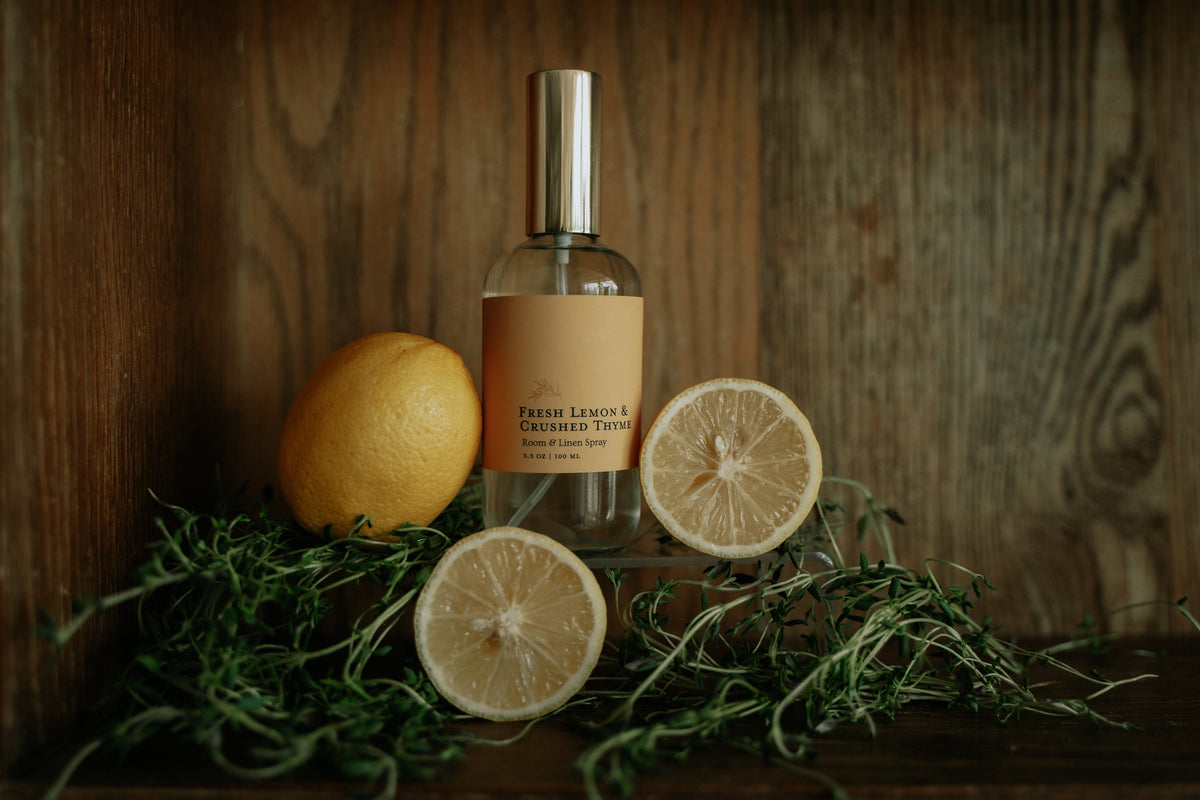
One of the most practical ways to extend the life of your bedding and home textiles is to reduce how often they need a full wash cycle in the first place. Pairing a quality enzyme detergent with a non-toxic linen spray, like those in Woodsy Homelife's linen essentials collection, gives you a complete maintenance system. The enzyme detergent handles deep, periodic cleaning while the linen spray refreshes fabrics between washes, neutralizing light odors and restoring that just-laundered feel without any chemical buildup or unnecessary fiber stress.
Dose Carefully, Wash Cool
When laundering delicates with an enzyme formula, less is genuinely more. Use the minimum recommended amount of a concentrated formula, select cool water, and run a gentle cycle. Modern enzyme systems are specifically engineered to perform in cold-water conditions, so there is no need to reach for a hot-water setting in the name of cleanliness. Correct dosing protects color integrity, prevents prolonged enzyme contact with fiber, and still delivers thorough, effective cleaning where it counts.
Why Enzyme Detergents Perform Better in Cold Water
There's a reason enzyme detergents have become the go-to choice for cold-water washing, and it comes down to basic chemistry. Conventional detergents are built around surfactants that need heat to fully activate. Hot water loosens their molecular structure, helps them penetrate fibers, and drives the dissolution of greasy, protein-based soils. Strip away that heat, and a lot of conventional formulas lose a significant share of their cleaning power. Enzyme detergents operate on an entirely different principle. Their active ingredients are biological catalysts that bind to specific soil molecules, break chemical bonds, and release water-soluble fragments through a precise lock-and-key mechanism. That process doesn't require thermal energy to function. It's inherently cold-water compatible in a way most mainstream formulas simply are not.
This distinction matters practically. In the 60 to 80°F range typical of a cold tap wash in most American homes, enzyme-based formulas consistently achieve comparable or superior stain removal when stacked against conventional detergents run at significantly higher temperatures. Peer-reviewed research published in Next Research (Elsevier, 2026) found that washing at 30°C versus 60°C reduces energy consumption by 35 to 50%, and that enzyme formulas are specifically engineered to maintain stable performance across that lower temperature range. For stubborn stains, a slightly longer soak amplifies the advantage further, giving enzymes more contact time to penetrate deeply into water-saturated fibers.
The fabric longevity benefits of cold-water washing are equally compelling, and they're often underappreciated in conversations about detergent performance. Lower temperatures reduce fiber stress with every wash, slow structural breakdown in delicate weaves, prevent shrinkage in natural materials, and preserve dye vibrancy over time. For premium textiles like linen, cotton sateen, and percale, the cumulative effect across dozens of wash cycles is significant. Cellulases, one of the core enzyme types found in high-quality detergent formulas, contribute directly to fabric surface maintenance, keeping fibers smoother and softer alongside their cleaning function.
Then there's the energy argument. Because heating water accounts for the vast majority of a washing machine's energy draw per cycle, switching to cold with a compatible enzyme formula is one of the highest-leverage household changes available. That 35 to 50% reduction per load adds up meaningfully across a year of laundry.
Enzyme detergents sit at a rare intersection: premium cleaning performance, measurable fabric preservation, and genuine environmental impact, all delivered in a single formula. That's a convergence worth paying attention to.
The Bottom Line on Enzyme Laundry Detergents
Everything covered in this guide points to the same conclusion: the best enzyme laundry detergent earns that title through three non-negotiable qualities. Full ingredient transparency, a multi-enzyme profile that targets real soil types like proteins, fats, and starches, and at least one recognized third-party certification such as EWG Verified, MADE SAFE, or EPA Safer Choice. A convincing label is not the same thing as a clean formula, and knowing how to tell the difference is exactly the advantage informed shoppers now hold.
For linens, bedding, and premium home textiles, enzyme detergents used in cold water remain the most protective and sustainable wash routine available today. They clean deeply without degrading delicate fibers, and they do it without the heat that accelerates fabric wear over time.
Greenwashing is still very much alive in this category. PVA pods, hidden synthetic fragrance, and ethoxylated surfactants tucked inside "natural" packaging are active pitfalls. Now you have the tools to avoid all of them.
That same standard of clean is exactly what Woodsy Homelife applies across every small-batch candle, body, and linen product they make. Their non-toxic ingredient philosophy does not stop at the bathroom shelf; it extends to laundry and linen care for a home that is genuinely clean from floor to fabric. Shop Woodsy Homelife's laundry and linen essentials to bring that clean-ingredient commitment to every single load.